
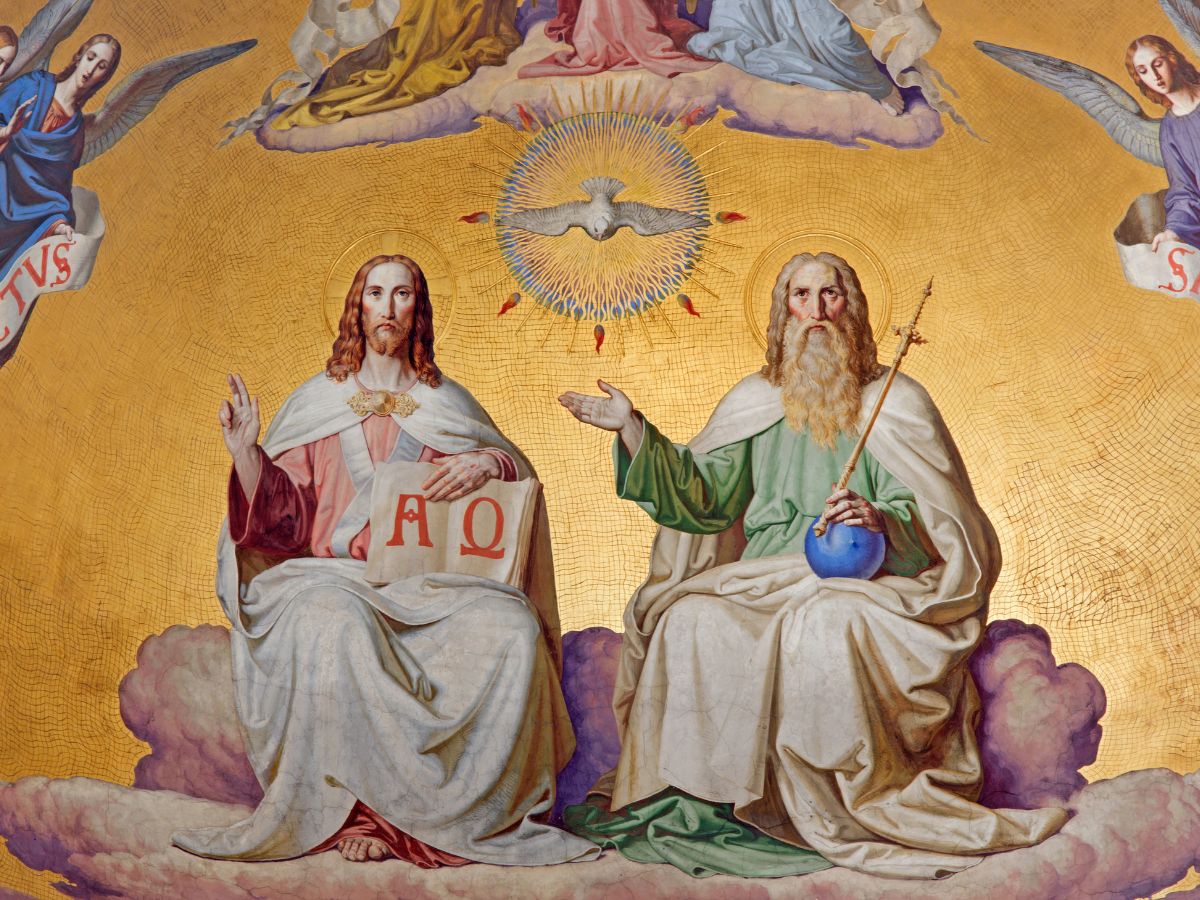
Weekly Devotional: The Solemnity of the Most Holy Trinity (Year A)
This week, as we celebrate the Solemnity of the Most Holy Trinity, we are invited into the deepest mystery of our Faith. God is one in essence, yet three in persons: Father, Son, and Holy Spirit. It’s a profound truth that surpasses our full understanding of the Most Holy Trinity, but reveals God’s infinite love and communion.
As we reflect on today’s readings, let us open our hearts to encounter the living God, who invites us into His eternal life.
A Look at the First Reading
In the Old Testament, we catch glimpses of God’s loving and merciful nature and clues pointing toward the divine mystery of the Trinity.
In the first reading from Exodus, Moses ascends Mount Sinai to renew the covenant with God and receive new tablets of the Law. As God descends in a cloud and proclaims His name, He reveals Himself as “merciful and gracious, slow to anger, and abounding in steadfast love and faithfulness.”
This passage highlights God’s self-revelation: His mercy and faithfulness, which foreshadows the fullness of His love revealed in the Trinity.
The cloud symbolizes God’s presence, representing the Spirit in biblical tradition, while His declaration of His name reflects His eternal nature.
The Psalm
The Responsorial Psalm takes us into a hymn of praise: ‘Glory and praise forever to God.’ This psalm focuses on the name of the Lord.
In praising God’s name, we are worshipping the same God who revealed Himself to Moses and who revealed himself fully in Jesus Christ.
The Second Reading
In 2 Corinthians, St. Paul offers a blessing: “The grace of the Lord Jesus Christ, the love of God, and the fellowship of the Holy Spirit be with you all.”
Paul explicitly names the three persons of the Trinity, emphasizing their unique roles while uniting them in one divine essence.
This trinitarian greeting reflects the prayer that underpins our faith and liturgical life.
The Gospel
John 3:16 is one of the most well-known verses, revealing God’s love through the sending of His Son: “For God so loved the world that He gave His only Son…” This profound act of love demonstrates the eternal relationship within the Trinity.
Ever wonder what ‘only begotten Son’ really means?
It’s more than just a title. It’s a declaration of Jesus’ divinity. When John speaks of Jesus as the ‘only begotten Son,’ he uses the Greek term monogenēs, which translates as ‘only begotten.’
This also isn’t just a label of affection; it highlights Jesus’ unique, eternal nature.
When St. Paul says “those of you who have been baptized into Christ have become sons,” he means that we have been brought into the sonship of Christ.
Angels are ‘created’ sons, and humans are ‘adopted’ sons. God is described as Father because He is the source of our being and life.
So, unlike angels or humans, who were created and have a beginning, Jesus is the “uncreated” Son of God. He has existed eternally with the Father and has no beginning.
When we read in the Scripture that “God sent his Son into the world,” it implies that Jesus existed as the divine Son before He took on human nature. He did not come into existence at conception. Jesus assumed a human nature while remaining fully divine.
The Trinity is a mystery that goes beyond what we can fully understand, but God has revealed it to us. We should try to grasp its basic meaning in order to profess our faith with understanding.
Connecting the Readings
As we reflect on these Scripture passages, the mystery of divine love and relationship unfolds.
Moses’ encounter with God on Mount Sinai presents God declaring His name: “I AM,” emphasizing His eternal, unchanging nature. His self-revelation as merciful and steadfast in love points us toward the core of who God is.
The psalm of praise echoes this theme. When we praise the name of the Lord, we acknowledge His loving relationship with us.
Paul’s trinitarian greeting is more than a formal blessing. It summarizes the divine life into which we are invited: an intimate community of love that exists among the persons of the Godhead.
Finally, Jesus’ famous words in the Gospel of John reveal that the sending of the Son is the ultimate expression of the Father’s love.
The eternal love within the Trinity manifests in the sending of Jesus into the world so that we might have eternal life. This act of divine love is not solely about salvation. It also invites us into the very life of God.
Application to Our Daily Lives
We often treat the doctrine of the Trinity as an abstract puzzle. But, at its core, it serves as a blueprint for how we are called to live.
It is an invitation to reflect the eternal, self-giving love shared among the Father, Son, and Holy Spirit in the messiness of our daily relationships.
Believing in the Trinity is not just about having the right ideas. It means living with humility, patience, and charity, following Christ’s example of self-giving love.
As James warns, belief alone, especially if it remains in the realm of the intellect, falls short.
But someone will say, “You have faith, and I have works.” Show me your faith apart from your works, and I by my works will show you my faith. You believe that God is one; you do well. Even the demons believe—and shudder.”
Faith becomes alive when it is expressed through mercy, kindness, and active love.
By allowing the grace of the Trinity to shape how we treat others, we become “practical Christians,” revealing the mystery through our daily acts of love and service.
This ongoing conversion prepares our hearts for the day when we will behold God face to face, fully known and loved, living forever in the divine communion for which we were created.
Key Takeaways
- God’s name revealed to Moses emphasizes His eternal, unchanging nature.
- Worshipping the name of the Lord properly understood is an act of encounter with the Triune God: Father, Son, and Holy Spirit.
- The cloud symbolizes the Holy Spirit’s presence in Scripture.
- The Father, Son, and Holy Spirit are distinct persons but share one divine nature.
- Jesus’ sending into the world demonstrates eternal love and preexistence.
- Our ultimate destiny is to enter into the life of the Trinity, sharing in divine love forever.
Final Thoughts
The mystery of the Holy Trinity is the foundation of our Faith.
It reveals the God of infinite love who invites us into His very life.
The Trinity is the mystery of who God is in Himself, while the cross is the mystery of what He has accomplished for us.
As we ponder these truths, let us open our hearts to experience the love, unity, and joy that flow from the eternal communion of Father, Son, and Holy Spirit.
May our lives reflect this divine love, drawing others into the beautiful mystery that is our God.
Your sister in Christ,
Michalina